
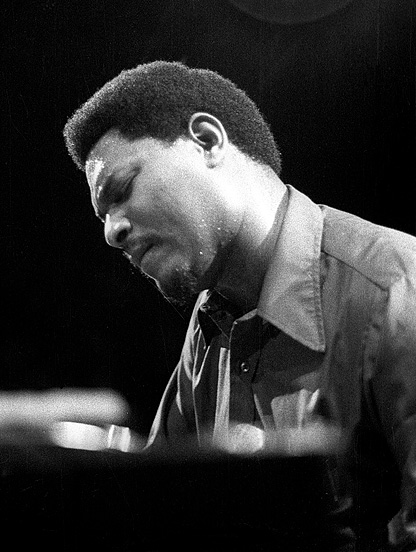

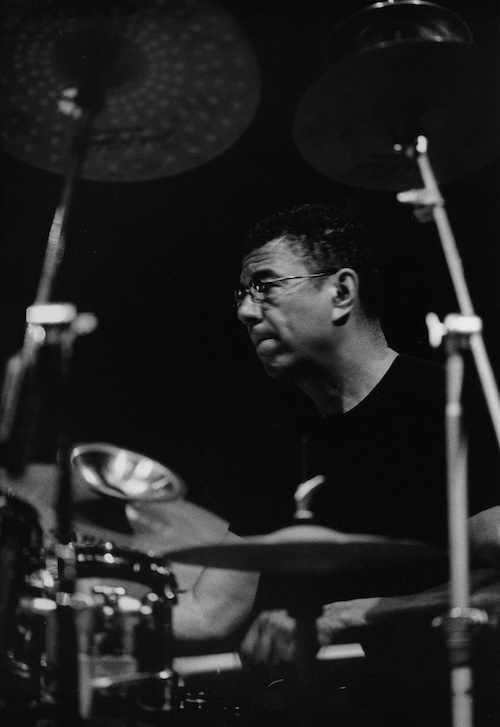

Of the many archival jazz releases that surface each year, few feel as electric and essential as Forces of Nature: Live at Slugs'. This previously unreleased recording from 1966 is more than just a historical artifact; it’s a direct transmission from a pivotal moment, presenting saxophonist Joe Henderson and pianist McCoy Tyner at the peak of their formidable powers.
The album transports the listener to the raw, intimate setting of New York’s legendary Slugs' Saloon, a venue known for fostering uninhibited creative expression. Freed from the confines of a recording studio, Henderson and Tyner, alongside the dream-team rhythm section of Henry Grimes on bass and a 23-year-old Jack DeJohnette on drums, dive headfirst into the music. The energy is palpable. You can hear the quartet seizing the moment, pushing familiar compositions like Henderson's "In 'n Out" (from In 'n Out) and "Isotope" (from Inner Urge) into new, exploratory territory.
Each artist was at a fascinating juncture. Tyner had recently departed John Coltrane's classic quartet and was forging his own identity as a leader; this performance predates his own classic The Real McCoy, which would cement his powerful chemistry with Henderson the following year. Henderson was already a formidable force on the Blue Note label, a proven composer and a highly sought-after sideman since his debut Page One. The enigmatic Grimes was a key figure in the free jazz movement, having played on seminal works like Don Cherry's Complete Communion, but was nearing a point where he would vanish from the scene for over 30 years. And the young DeJohnette was a volcano of talent on the verge of erupting, soon to make history with Charles Lloyd and Miles Davis, and would later reunite with Henderson for the fiery Power to the People. This session documents the unique intersection of these four distinct paths, a convergence that truly makes this a 'Night of the Elements'.
The performance reveals what Zev Feldman calls "a volatile beauty imbued with the sanctified soul of the deepest jazz history." The interplay is a masterclass in improvisational dialogue. Henderson's saxophone is a commanding presence, his solos weaving intricate, "boppish rib-mic-bop" lines with a searing, emotional tone. Tyner, fresh from his transformative years with the John Coltrane Quartet, matches this energy with powerful, cascading chords and harmonically rich explorations, demonstrating the "paradigm of harmonic intuition" he had honed.
The set list itself is a journey. It ignites with a nearly 30-minute deconstruction of Henderson's "In 'n Out," a blistering exploration that immediately establishes the night's high-stakes energy. The quartet then shifts gears into a stunningly lyrical reading of the ballad "We'll Be Together Again," offering a moment of tender reflection before launching into the album's other epic, the group-credited "Taking Off." This piece is a marathon of collective invention. The back half of the set presents Tyner's soulful, swinging composition "The Believer," followed by a joyous romp through Henderson's "Isotope," a perfectly groovy and Monkish theme that brings the incredible performance to a satisfying close.