The Razor Blade and the Pantomime: How Thelonious Monk Broke His Own Band on Brilliant Corners
Over twenty-five failed takes at Reeves Sound Studios, a furious bassist played air-bass in protest while producer Orrin Keepnews salvaged a jazz masterpiece with editing tape.
By Linernotd Jazz | Published on October 15, 2026
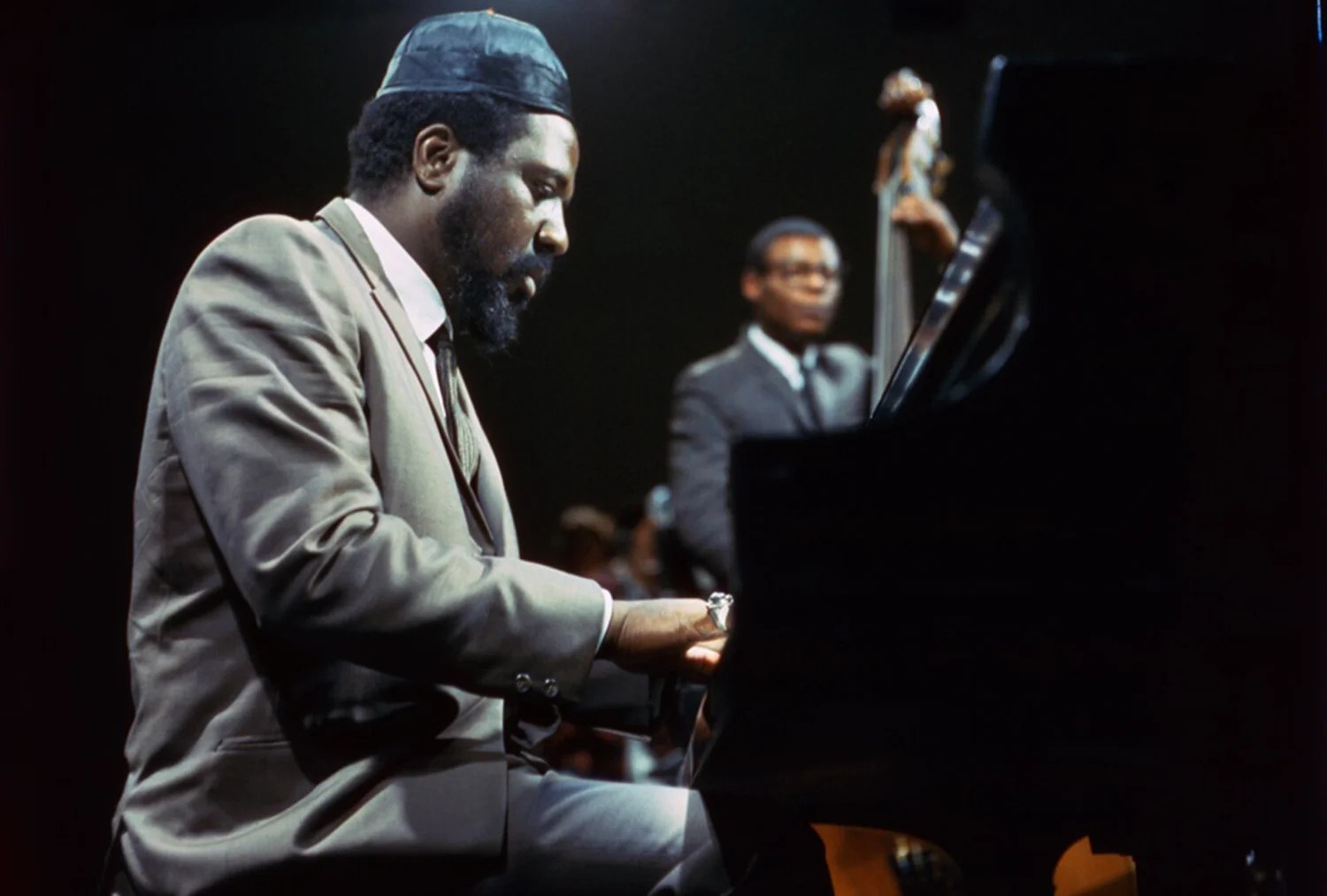
When Thelonious Monk walked into New York's Reeves Sound Studios on October 15, 1956, Riverside Records producer Orrin Keepnews was simply hoping to capture a clean original album to rehabilitate Monk's reputation. Monk had spent the previous two years recording safe cover albums of Duke Ellington and standard ballads to prove to skeptical club owners that he could actually play the piano. To anchor his return to original composition, Keepnews surrounded him with an undeniable, world-class quintet: Sonny Rollins on tenor saxophone, Ernie Henry on alto, Oscar Pettiford on upright bass, and Max Roach on drums. Within four hours, the music had nearly caused a fistfight.
The culprit was the album's title track. Instead of a standard 12-bar blues or a 32-bar ballad, Monk handed the band a lopsided, 22-bar ternary puzzle (structured in asymmetrical sections of eight, seven, and seven bars) that abruptly doubled its tempo on every second chorus. Even for four of the sharpest players in New York, the jagged timing was a trap. Every time the band hit the tempo switch, someone missed their entry.
As the session dragged past the twentieth failed attempt, the mechanics inside the room completely deteriorated. Alto saxophonist Ernie Henry was getting so thoroughly derailed by Monk's erratic, off-beat chord stabs behind him that the only way Henry could survive his own solo was for Monk to literally stop playing and sit in silence at the bench.
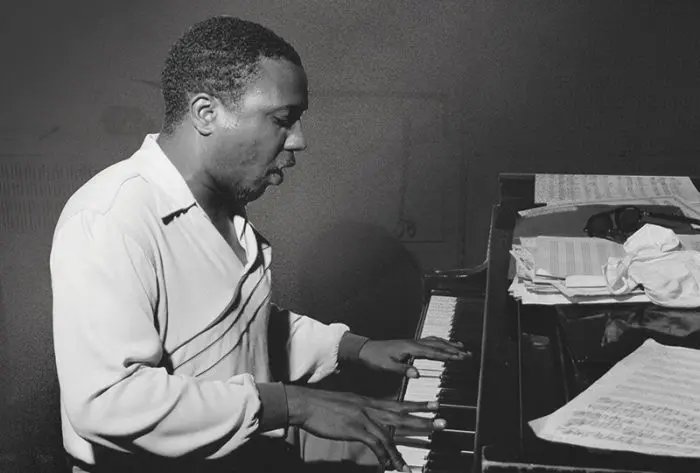
Across the room, Oscar Pettiford reached his breaking point. During one late take, Keepnews and engineer Jack Higgins noticed in the control room that the bass had vanished from the mix entirely. Assuming a cable had shorted out, Keepnews paused the session to inspect the microphone positioned in front of Pettiford's instrument. The gear was fine; Pettiford was so furious at Monk that he had stopped plucking the strings altogether, standing in the middle of the studio aggressively pantomiming his basslines in dead silence.
After twenty-five attempts, the band packed up their instruments without a single complete performance on the reels, and Pettiford and Henry never recorded with the pianist again. Left with a pile of aborted tape, Keepnews and Higgins locked themselves in the editing room with a splicing block and a razor blade, physically cutting and taping together fragments from multiple broken takes to manufacture a continuous seven-minute track. When Brilliant Corners arrived on shelves, it was hailed as the crowning achievement of post-war American jazz, anchored by a title track that five legends couldn't play all the way through once.